Friday, July 28, 2023

Ravana Series- Sita's Relationship with Ravana: A Tale of Perseverance and Triumph

In certain regional versions and adaptations of the Ramayana, there are alternative narratives that suggest Ravana is Sita's father. These versions present a unique and thought-provoking twist to the traditional story, adding further layers of complexity to the characters and their relationships. However, it is essential to recognize that these interpretations are not part of the mainstream Ramayana as described in the Valmiki Ramayana or other widely accepted versions of the epic.

The concept of Ravana being Sita's father originates from certain folktales, particularly in some South Indian traditions. According to these interpretations, Ravana's sister, Surpanakha, was infatuated with Lord Rama and sought to marry him. Learning about Surpanakha's unrequited love, Ravana takes pity on his sister and proposes to find her a suitable husband. After a series of events, Ravana brings Surpanakha to Lord Vishnu (who is later incarnated as Lord Rama) and requests that He marry her. Lord Vishnu declines the proposal, stating that He is already destined to marry Sita, who is an aspect of the Goddess Lakshmi.

In this version, Ravana performs a Yajna (a ritual) to seek the blessing of a son who would be a worthy match for his sister Surpanakha. During the Yajna, a baby girl emerges from the sacrificial fire, and Ravana takes her as his own daughter, naming her Sita. As Sita grows up, she becomes the embodiment of the Goddess Lakshmi, and it is foretold that she will play a crucial role in Ravana's destiny.
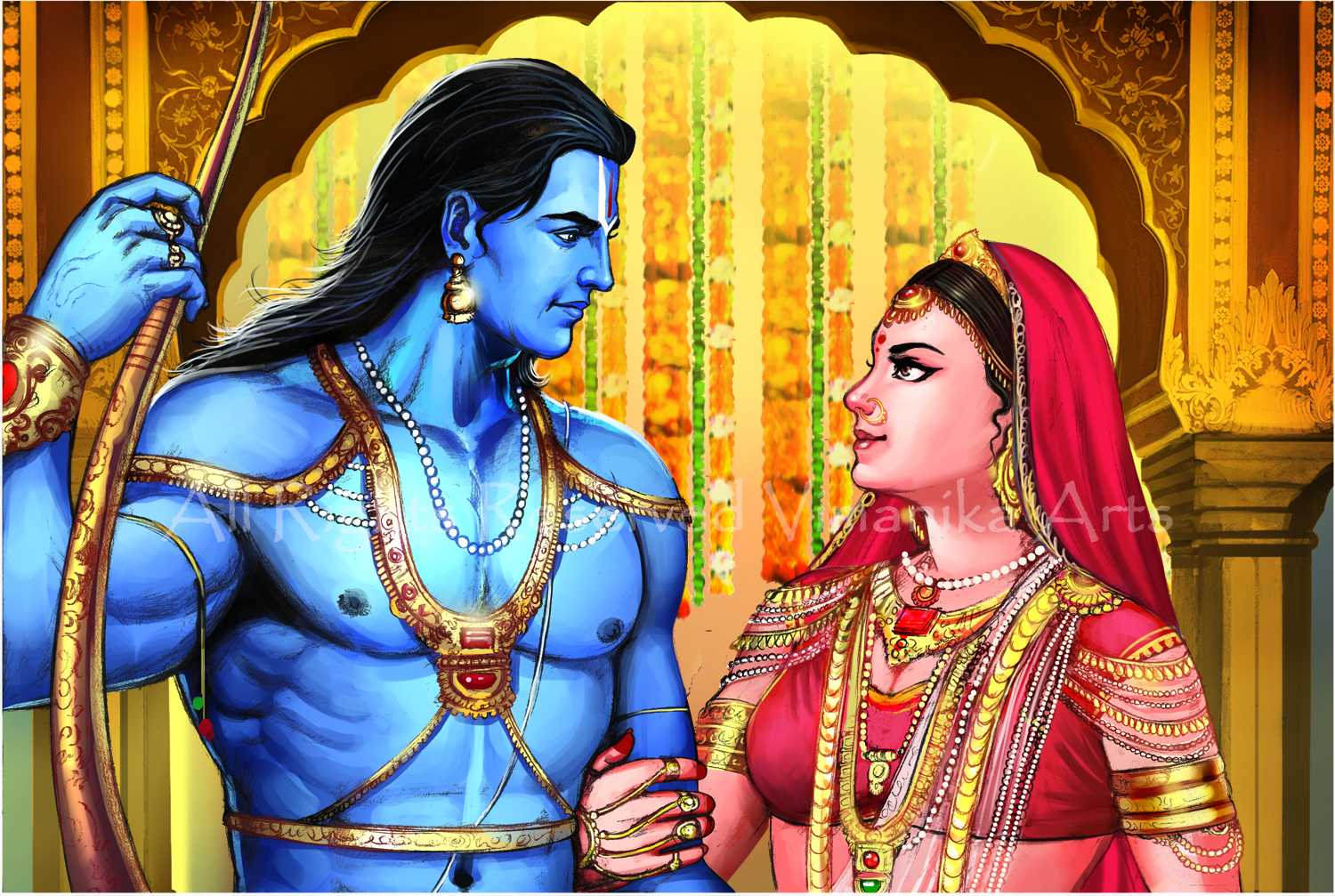
Despite this alternative narrative, it is crucial to reiterate that the mainstream Ramayana, including the Valmiki Ramayana and other well-known versions, consistently describes Sita as the daughter of King Janaka and Queen Sunayana of Mithila. The central theme of Sita's relationship with Rama, her exile, and the subsequent events leading to her rescue from Ravana's captivity remains consistent in these traditional tellings.

Alternative narratives in mythology and folklore often offer diverse perspectives and interpretations of well-known stories. They encourage us to view characters from different angles and appreciate the rich complexity of human emotions and relationships. However, while these alternative versions are intriguing, it is essential to differentiate them from the widely accepted and historically significant Ramayana, which holds a revered place in Hindu culture and literature.

Monday, July 24, 2023

Ravana Series - Women in the life of Ravana: Their Role and Mythological Significance

In Hindu mythology, Ravana, the formidable demon king of Lanka, is known for his power, intellect, and complex character. But behind his imposing presence, there were several wives who played significant roles in shaping his life and the trajectory of the epic Ramayana. In this blog, we talk about the women who were a part of Ravana's life, exploring their unique personalities, their relationships with him, and the impact they had on the mythological narrative. 

Mandodari: The Loyal and Virtuous Queen:

Mandodari, the primary wife of Ravana, is often portrayed as the epitome of loyalty, grace, and moral integrity. Despite her husband's flaws and his obsession with Sita, Mandodari remains steadfastly devoted, offering counsel and trying to steer Ravana toward righteousness. Her unwavering support and wise advice shed light on the complexity of Ravana's character and the internal conflicts he faced.


Kaikesi: The Ambitious and Influential Queen Mother:
Kaikesi, the mother of Ravana, is a figure of immense influence and ambition. Known for her beauty and supernatural powers, she played a pivotal role in shaping her son's destiny. Kaikesi's own desires for power and dominance often aligned with Ravana's ambitions, further fueling the events of the Ramayana. Her character adds depth and complexity to the narrative while highlighting the influence of maternal figures in mythology.


Shurpanakha: The Catalyst for Conflict:
Shurpanakha's role (Ravana's sister) in the story is significant. Infatuated with Rama, Shurpanakha's actions lead to a sequence of events that set the stage for the ultimate battle between Ravana and Rama. Shurpanakha's desires and her encounter with Rama and Lakshmana reveal the underlying tensions and rivalries that eventually escalate into a tale of epic proportions.


Other Wives and Consorts:
Apart from Mandodari, Ravana had several other wives and consorts who are often mentioned in various versions of the mythological tales. Dhanyamalini, Padmini, and Kalyani are among the wives who add depth to Ravana's character and highlight his complex relationships with women.

The wives of Ravana bring a multifaceted dimension to the mythological narrative of the Ramayana. Their characters represent loyalty, ambition, influence, and desire, all contributing to the intricacies of Ravana's life and choices. Exploring their stories provides insight into the larger themes of power, morality, and the consequences of actions. It reminds us that behind every legendary figure, there are often fascinating women who shape their destinies in both ordinary and extraordinary ways.

Friday, July 14, 2023

Did Sita curse Ayodhya?

In Hindu mythology, the epic tale of Ramayana captivates generations with its enchanting characters and moral lessons. Ayodhya, the birthplace of Lord Rama, holds immense significance in this narrative. However, there is a long-standing belief that Sita, the beloved wife of Lord Rama, cursed Ayodhya before departing from the kingdom. In this article, we delve into this intriguing topic and seek to separate fact from fiction.


According to the Ramayana, after rescuing Sita from the clutches of the demon king Ravana, Lord Rama returns to Ayodhya to reclaim his rightful place on the throne. However, upon their return, Sita faces a series of trials and tribulations, as doubts about her chastity and purity are cast upon her by the people of Ayodhya. Heartbroken and feeling misunderstood, Sita chooses to leave Ayodhya and seek solace in the arms of Mother Earth.

It is widely believed that as Sita departs from Ayodhya, she curses the kingdom, declaring that it would forever remain devoid of peace and prosperity. This belief has been perpetuated through retellings of the Ramayana, folklore, and cultural narratives. However, it is important to examine the origins of this belief and explore alternative interpretations.

When we analyze the ancient texts of the Ramayana, we find no explicit mention of Sita cursing Ayodhya. The original Valmiki Ramayana considered the oldest and most authentic version, does not include this episode. The absence of scriptural evidence raises questions about the veracity of popular belief.


Sita is revered as the epitome of virtue, purity, and selflessness. Throughout the Ramayana, her actions demonstrate immense love, devotion, and resilience. It is unlikely that such a compassionate and forgiving character would curse an entire kingdom, especially considering her deep connection to Ayodhya as her birthplace and the kingdom of her beloved husband.

After Sita's departure, Ayodhya remains immersed in grief and sorrow. However, it is important to note that the Ramayana portrays Ayodhya's redemption through Lord Rama's reign. Under his rule, Ayodhya flourishes, experiencing an era of peace, prosperity, and righteousness. This contradicts the notion of a perpetual curse cast by Sita.

Rather than accepting the literal interpretation of a curse, scholars and pundits offer alternative symbolic explanations. Some suggest that Sita's departure from Ayodhya represents the temporary loss of divine grace, which is later restored through Lord Rama's presence and virtuous rule. Others interpret Sita's departure as a necessary step in the divine plan to fulfill her role as the eternal embodiment of Mother Earth.


While the belief that Sita cursed Ayodhya may persist in popular folklore, it lacks substantial evidence within the original texts of the Ramayana. Examining Sita's nature, Ayodhya's eventual prosperity, and the absence of scriptural support, we can challenge this myth. It is crucial to approach ancient narratives with a critical lens and seek a deeper understanding of their symbolic meanings. The story of Sita and Ayodhya continues to inspire, teaching us valuable lessons of love, devotion, and the triumph of righteousness over adversity.

Ravana Series- Sita's Relationship with Ravana: A Tale of Perseverance and Triumph

In certain regional versions and adaptations of the Ramayana, there are alternative narratives that suggest Ravana is Sita's father. The...