Showing posts with label Good. Show all posts

Friday, July 14, 2023

Did Sita curse Ayodhya?

In Hindu mythology, the epic tale of Ramayana captivates generations with its enchanting characters and moral lessons. Ayodhya, the birthplace of Lord Rama, holds immense significance in this narrative. However, there is a long-standing belief that Sita, the beloved wife of Lord Rama, cursed Ayodhya before departing from the kingdom. In this article, we delve into this intriguing topic and seek to separate fact from fiction.


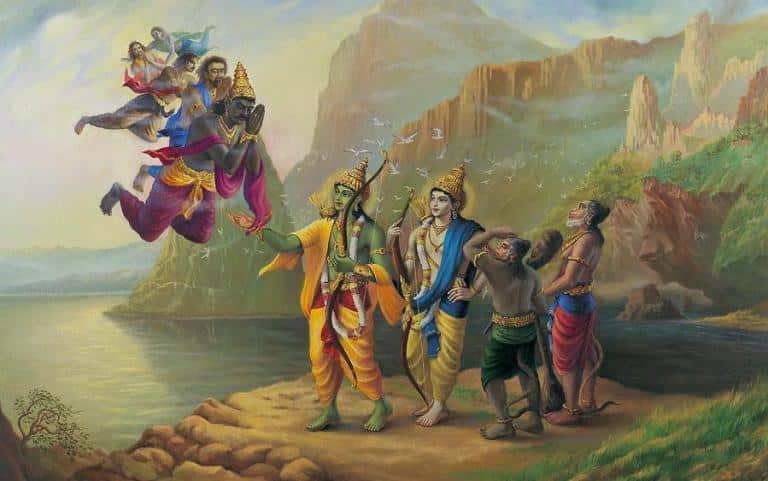
According to the Ramayana, after rescuing Sita from the clutches of the demon king Ravana, Lord Rama returns to Ayodhya to reclaim his rightful place on the throne. However, upon their return, Sita faces a series of trials and tribulations, as doubts about her chastity and purity are cast upon her by the people of Ayodhya. Heartbroken and feeling misunderstood, Sita chooses to leave Ayodhya and seek solace in the arms of Mother Earth.

It is widely believed that as Sita departs from Ayodhya, she curses the kingdom, declaring that it would forever remain devoid of peace and prosperity. This belief has been perpetuated through retellings of the Ramayana, folklore, and cultural narratives. However, it is important to examine the origins of this belief and explore alternative interpretations.

When we analyze the ancient texts of the Ramayana, we find no explicit mention of Sita cursing Ayodhya. The original Valmiki Ramayana considered the oldest and most authentic version, does not include this episode. The absence of scriptural evidence raises questions about the veracity of popular belief.
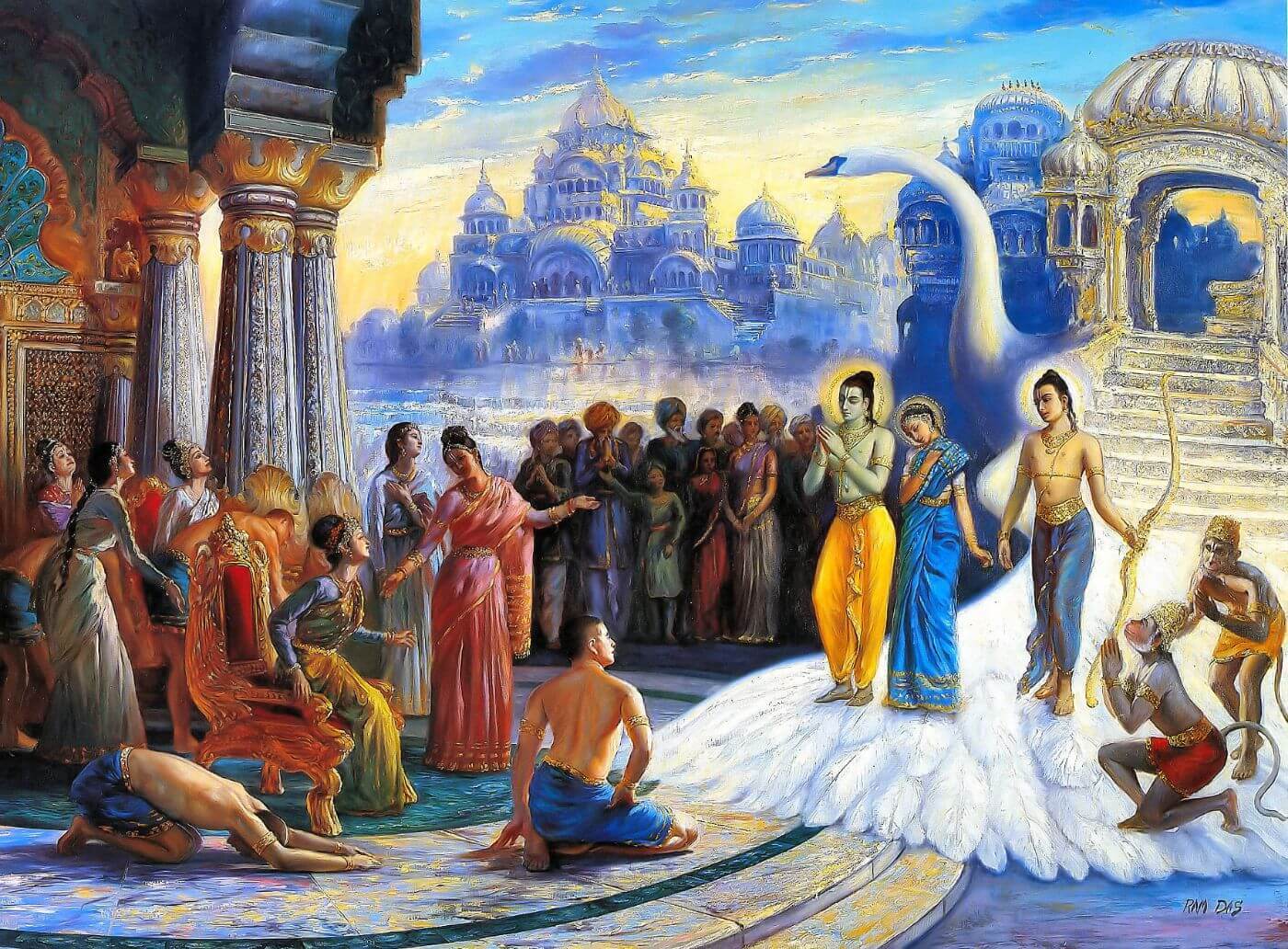

Sita is revered as the epitome of virtue, purity, and selflessness. Throughout the Ramayana, her actions demonstrate immense love, devotion, and resilience. It is unlikely that such a compassionate and forgiving character would curse an entire kingdom, especially considering her deep connection to Ayodhya as her birthplace and the kingdom of her beloved husband.

After Sita's departure, Ayodhya remains immersed in grief and sorrow. However, it is important to note that the Ramayana portrays Ayodhya's redemption through Lord Rama's reign. Under his rule, Ayodhya flourishes, experiencing an era of peace, prosperity, and righteousness. This contradicts the notion of a perpetual curse cast by Sita.

Rather than accepting the literal interpretation of a curse, scholars and pundits offer alternative symbolic explanations. Some suggest that Sita's departure from Ayodhya represents the temporary loss of divine grace, which is later restored through Lord Rama's presence and virtuous rule. Others interpret Sita's departure as a necessary step in the divine plan to fulfill her role as the eternal embodiment of Mother Earth.


While the belief that Sita cursed Ayodhya may persist in popular folklore, it lacks substantial evidence within the original texts of the Ramayana. Examining Sita's nature, Ayodhya's eventual prosperity, and the absence of scriptural support, we can challenge this myth. It is crucial to approach ancient narratives with a critical lens and seek a deeper understanding of their symbolic meanings. The story of Sita and Ayodhya continues to inspire, teaching us valuable lessons of love, devotion, and the triumph of righteousness over adversity.

Monday, June 26, 2023

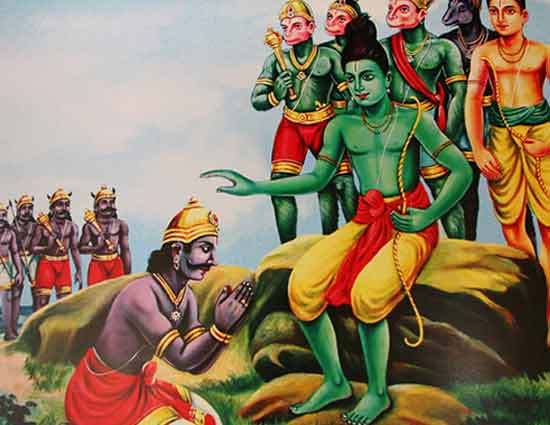
Vibhishana Series: Myths and Realities of His Fate After the Ramayana War

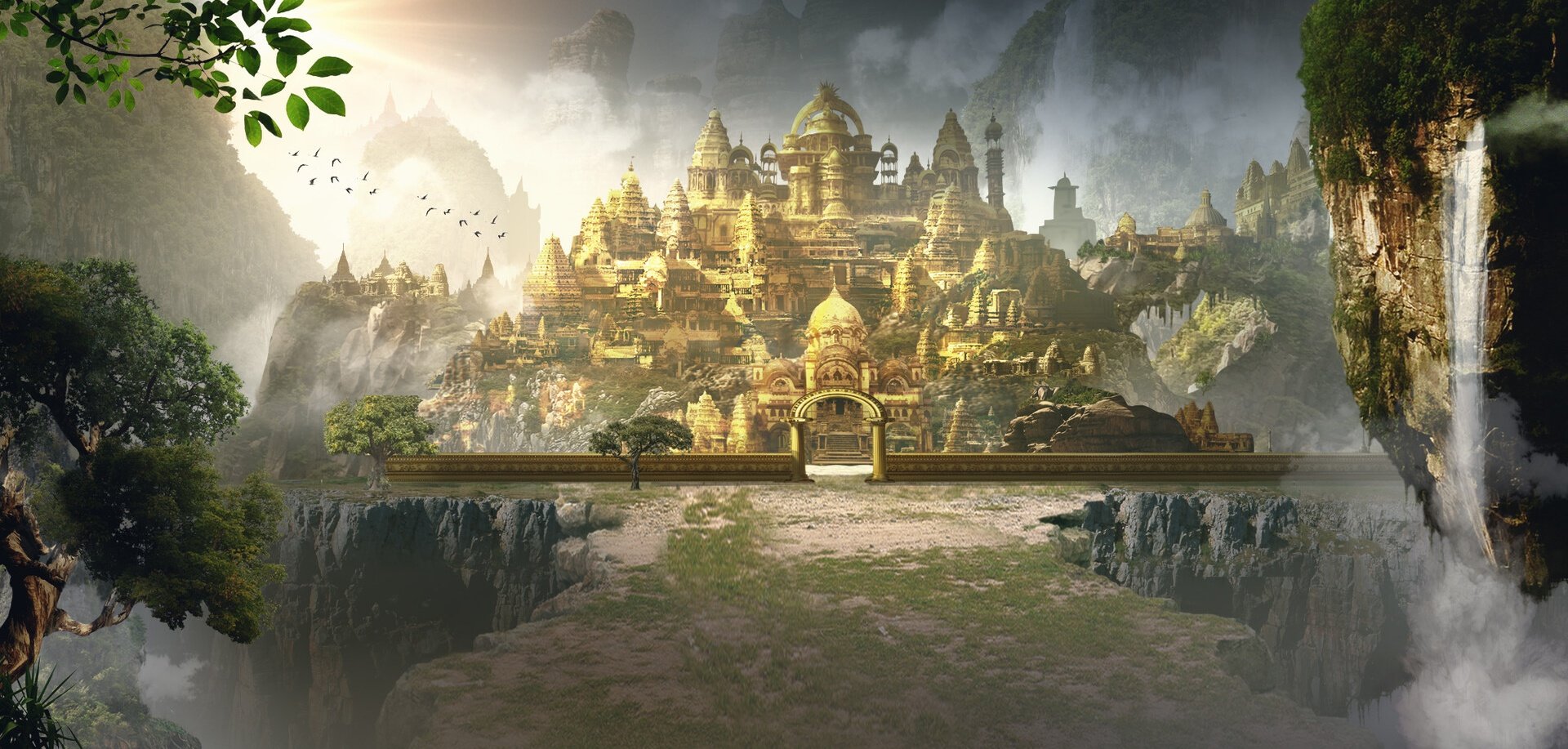
The epic Ramayana is replete with extraordinary tales, and one intriguing story surrounds Vibhishana, the virtuous brother of Ravana. After the war between Lord Rama and Ravana, Vibhishana was tasked with the challenging responsibility of removing demons from the human realm. According to a captivating narrative, he achieved this by transporting the entire kingdom of Lanka into another dimension. In this article, we delve into the myth and symbolism behind Vibhishana's remarkable feat, exploring the significance and interpretations of this mystical event.

As a result of his unwavering loyalty to righteousness and his allegiance to Lord Rama, Vibhishana was entrusted with the important task of separating the demons from the human population. The objective was to restore peace and harmony among humans, free from the malevolent influence of the demonic forces that had plagued them for years.

In a remarkable display of his mystical prowess, Vibhishana purportedly used his divine knowledge to transport the entire kingdom of Lanka to another dimension. By doing so, he effectively removed the demons and their malevolent presence from the human realm. This act is often seen as a transformative and redemptive gesture, symbolising the removal of evil and the restoration of harmony.


The story of Lanka being taken to another dimension by Vibhishana holds profound symbolic meaning. It represents the separation of darkness and light, the triumph of good over evil, and the transcendence of negative influences. This act serves as a metaphorical representation of the need to remove negativity from our lives and create a space for positivity and harmony to flourish.

Beyond the literal interpretation, some scholars and spiritual enthusiasts perceive Vibhishana's act as an allegory for personal transformation and the battle between our inner demons and higher selves. It encourages individuals to introspect, identify negative influences within themselves, and embark on a journey towards self-improvement and spiritual growth.

The story of Lanka's journey to another dimension has resonated deeply within various cultural traditions and artistic expressions. It is often depicted in paintings, sculptures, and performances, symbolising the triumph of good and the power of righteous actions. The tale serves as a reminder of the importance of making choices that align with virtue and the potential for personal and societal transformation.


The myth surrounding Vibhishana's miraculous act of transporting Lanka to another dimension carries profound symbolism and allegorical significance. It represents the separation of negative influences and the restoration of harmony. This captivating tale serves as a reminder of the transformative power of righteousness and the potential for personal and collective growth. Whether viewed as a literal event or a metaphorical journey, Vibhishana's extraordinary feat remains an enduring testament to the triumph of good over evil in the epic Ramayana.

Friday, June 16, 2023

Ravana Series- Exploring the Birthplace of Ravana - Myths, Magic, and Reality

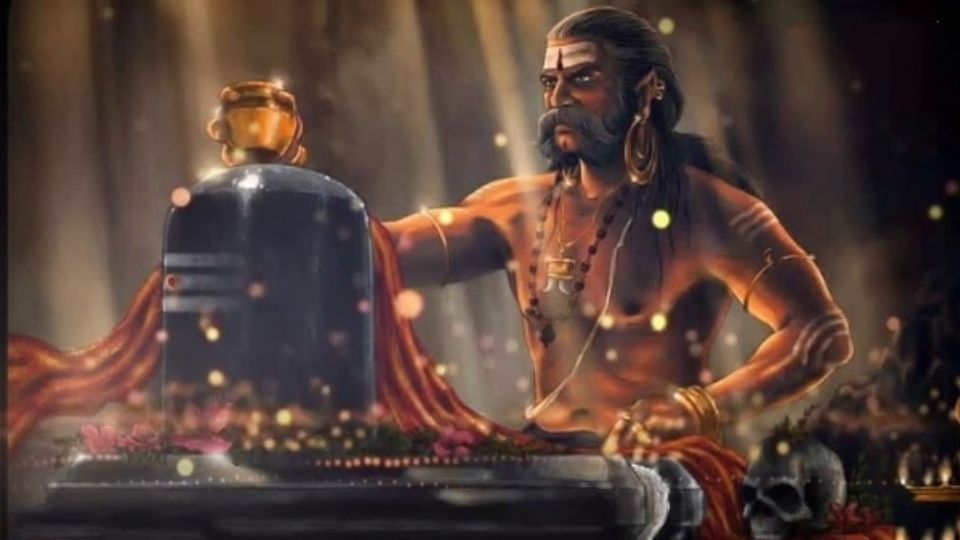
Ravana, the legendary demon king from the epic Ramayana, is known for his power, intellect, and complex character. Among the many fascinating aspects of his story is the enigma surrounding his birthplace. In this blog article, we embark on a journey to uncover the birthplace of Ravana, explore its magical attributes, and unravel the myths and realities that shroud this mystical location.


According to Hindu mythology, Ravana was born in a place called Bisrakh, located in present-day Uttar Pradesh, India. This ancient town holds great significance in the Ramayana narrative as the birthplace of the formidable demon king. It is believed to have been a land of mysticism and enchantment, where extraordinary events unfolded.

Bisrakh was said to possess magical qualities and was inhabited by beings with supernatural abilities. Legends speak of mystical energies flowing through the land, making it a potent source of spiritual power. The atmosphere was said to be charged with an otherworldly aura, lending an air of mystique to the birthplace of Ravana.

Numerous myths and tales surround the birthplace of Ravana, adding to its mysticism. One legend suggests that Bisrakh was blessed by Lord Shiva, who granted supernatural powers to its inhabitants. Another myth speaks of ancient sages and seers residing in the region, fostering an environment of spiritual enlightenment.


While Bisrakh holds immense cultural and historical significance, it is important to distinguish between myth and reality. Historically, Bisrakh was an important settlement during the Indus Valley Civilization and witnessed the rise and fall of various empires throughout its existence. Its archaeological remains provide glimpses into its rich past.

The association of Bisrakh with Ravana has left an indelible mark on the region's culture and traditions. Local festivals, rituals, and folklore celebrate the heritage of the mythical birthplace. The stories of Ravana's lineage and the town's connection to the epic Ramayana continue to captivate the imagination of residents and visitors alike.

The mystique surrounding Bisrakh and its association with Ravana invites us to reflect on the deeper symbolic meanings embedded in mythology. It serves as a reminder of the eternal struggle between good and evil, the complexity of human nature, and the power of redemption.


As with any historical and cultural site, the preservation of Bisrakh's heritage is of utmost importance. Efforts should be made to protect and document the archaeological remains, ensuring that future generations can continue to appreciate and study the rich legacy of the birthplace of Ravana.

The birthplace of Ravana, Bisrakh, holds an allure that transcends time and mythology. Its magical attributes, myths, and historical significance make it a captivating destination for those interested in the epic tales of the Ramayana. As we explore the mysteries and realities surrounding this mystical location, we gain a deeper appreciation for the cultural heritage and the enduring impact of mythology on our collective imagination.

Thursday, June 15, 2023

Ravana Series - Sri Lanka: Unraveling the Myth of Ravana's Lanka

The enchanting island nation of Sri Lanka has long been associated with tales of mythology and ancient folklore. One captivating myth that has lingered for centuries is the belief that Sri Lanka was the legendary kingdom of Ravana, the demon king of the epic Ramayana. In this blog, we delve into the myth of Sri Lanka being Ravana's Lanka and explore the historical and cultural perspectives that shed light on this intriguing belief.


According to the Ramayana, Ravana abducted Sita, the wife of Lord Rama, and took her to his kingdom called Lanka. The epic narrates the heroic journey of Rama and his allies to rescue Sita from Ravana's clutches. Over time, the name "Lanka" became synonymous with Ravana's kingdom, and its connection with present-day Sri Lanka emerged.

While the Ramayana is a treasured mythological text, historians and archaeologists approach the story with a critical lens. Extensive research and analysis have not revealed concrete evidence linking Sri Lanka to Ravana's Lanka. The Ramayana, though revered, is primarily a work of mythology, blending historical events with allegorical and symbolic elements.

The Ramayana describes the journey undertaken by Lord Rama from the Indian subcontinent to Lanka. According to the epic, Rama and his army crossed a mythical bridge called "Rama Setu" or "Adam's Bridge" to reach Lanka. The distance mentioned in the Ramayana is often interpreted as being from southern India to present-day Sri Lanka.


The existence of a natural land bridge connecting India and Sri Lanka has long fascinated scholars and explorers. Known as Rama Setu or Adam's Bridge, this formation of sandbanks and shoals extends between the two countries. However, the connection between the bridge and the events described in the Ramayana remains a topic of debate.

Sri Lanka, officially known as the Democratic Socialist Republic of Sri Lanka, is an island nation situated in the Indian Ocean. Geographically, it is located southeast of the southern tip of the Indian subcontinent. Sri Lanka shares maritime boundaries with India to the northwest and the Maldives to the southwest.

While it is intriguing to explore the connections between mythology and historical geography, it is important to respect the distinction between myth and reality. The allure of Ravana's Lanka lies in its mythical and metaphorical significance rather than its geographical location. Sri Lanka should be celebrated for its own rich history, diverse culture, and natural beauty.


Sri Lanka, with its stunning landscapes, vibrant culture, and warm hospitality, has a heritage that extends far beyond the realm of mythology. The country's fascinating history, ancient ruins, and diverse traditions make it a captivating destination that stands on its own merits.

The myth of Sri Lanka as Ravana's Lanka adds an intriguing layer to the tapestry of folklore and legends that surround the island nation. While the connection between Sri Lanka and Ravana's Lanka is subject to interpretation, it is the historical, cultural, and natural wonders of Sri Lanka that truly make it a captivating destination. Let us appreciate and celebrate the unique identity of Sri Lanka, embracing its rich heritage and the remarkable stories that have shaped its past and present.

Thursday, June 8, 2023

Ravana Series - The Myth of Ravana's Lanka in Another Dimension: Exploring the Reality

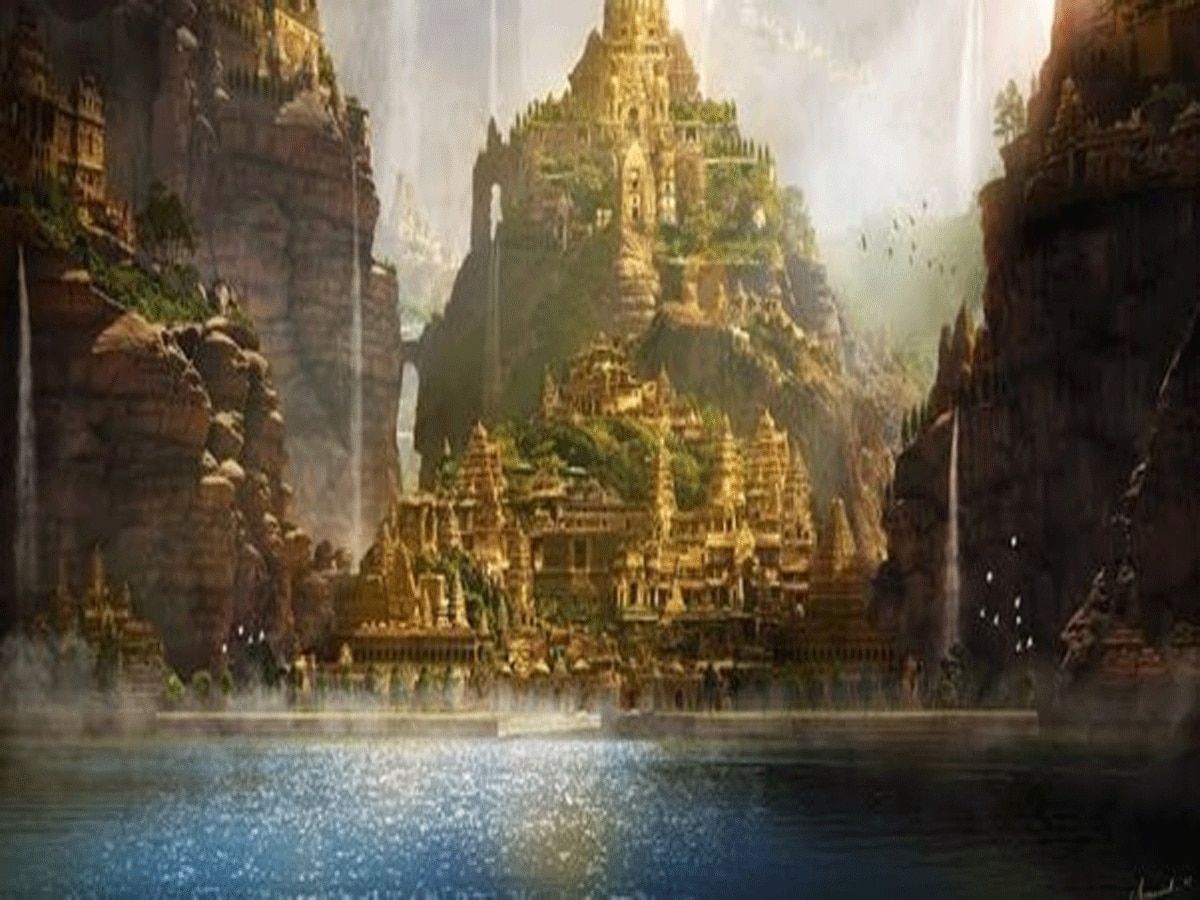
The epic Ramayana has captured the imagination of millions, recounting the legendary tale of Lord Rama's quest to rescue his wife Sita from the clutches of the demon king Ravana. Amidst the story's mystical elements, one intriguing concept stands out: the belief that Ravana's kingdom, Lanka, exists in another dimension. In this article, we delve into the myth surrounding Ravana's Lanka and explore its origins, interpretations, and the reality behind this enchanting notion.


According to certain interpretations, Ravana's Lanka was not merely a physical place but an otherworldly realm, existing in a dimension separate from our own. This concept has captivated the imagination of many, envisioning Lanka as a magical land with extraordinary qualities beyond human comprehension.

One perspective suggests that the idea of Lanka in another dimension serves as a metaphorical representation rather than a literal interpretation. It symbolises the spiritual and psychological battles fought within oneself, with Ravana representing the inner demons or negative aspects that one must conquer to attain spiritual enlightenment.


The concept of Lanka in another dimension holds deep religious and cultural symbolism. It emphasises the eternal struggle between good and evil, the triumph of righteousness over wickedness, and the notion that spiritual realms exist beyond the physical realm.

Different versions and interpretations of the Ramayana exist across various cultures and regions, resulting in diverse perspectives on Lanka's nature. Some adhere to the belief in an actual otherworldly dimension, while others view it as a metaphorical construct or symbolic representation.

It is important to understand the historical and cultural context of the Ramayana. The epic is a revered mythological text, embodying moral and ethical teachings. The concept of Lanka in another dimension may have been introduced to add an element of wonder, mystery, and transcendence to the narrative rather than as a factual representation.


While Lanka's existence in another dimension is an intriguing concept, it is not grounded in verifiable evidence or historical records. The Ramayana is a work of mythology, containing fantastical elements that should be approached with a metaphorical or symbolic understanding.

Regardless of the reality of Ravana's Lanka, the epic Ramayana has left an indelible mark on literature, art, and cultural traditions across generations. Its moral teachings, lessons of righteousness, and the eternal struggle between good and evil continue to inspire and guide individuals worldwide.

The myth surrounding Ravana's Lanka in another dimension adds an enchanting layer to the epic tale of the Ramayana. While it sparks our imagination and prompts contemplation, it should be regarded within the context of mythology and symbolism. Ultimately, the enduring legacy of the Ramayana lies in its timeless teachings and its ability to inspire individuals to embrace goodness and overcome the challenges within themselves.

Ravana Series- Sita's Relationship with Ravana: A Tale of Perseverance and Triumph

In certain regional versions and adaptations of the Ramayana, there are alternative narratives that suggest Ravana is Sita's father. The...