Showing posts with label Divine. Show all posts

Monday, July 24, 2023

Ravana Series - Women in the life of Ravana: Their Role and Mythological Significance

In Hindu mythology, Ravana, the formidable demon king of Lanka, is known for his power, intellect, and complex character. But behind his imposing presence, there were several wives who played significant roles in shaping his life and the trajectory of the epic Ramayana. In this blog, we talk about the women who were a part of Ravana's life, exploring their unique personalities, their relationships with him, and the impact they had on the mythological narrative. 

Mandodari: The Loyal and Virtuous Queen:

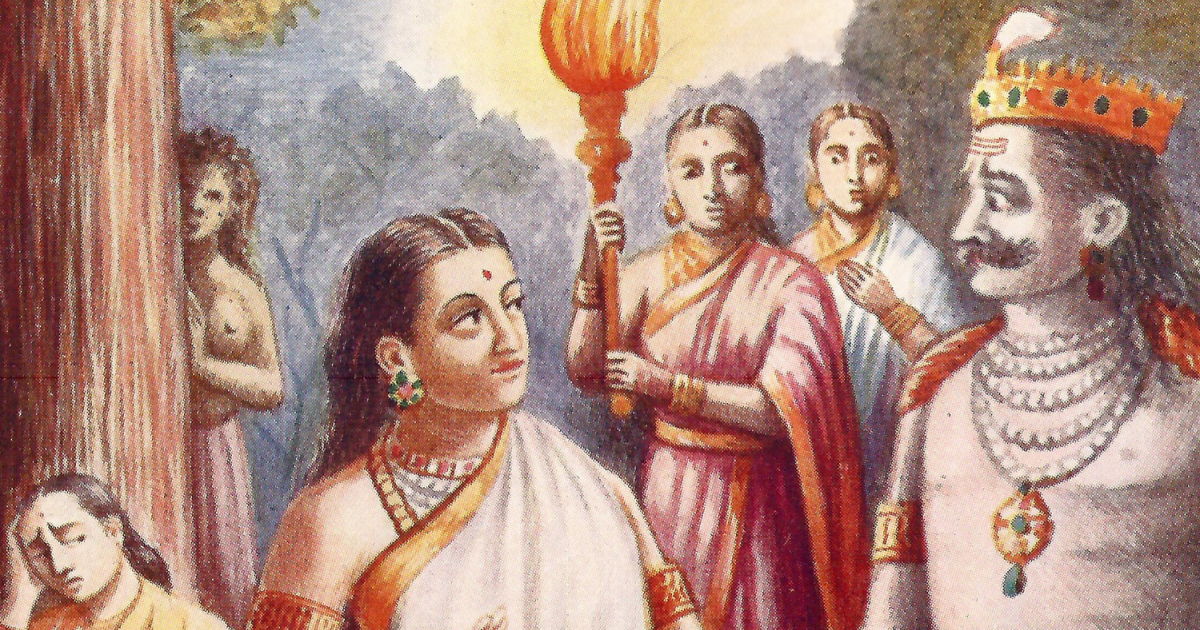
Mandodari, the primary wife of Ravana, is often portrayed as the epitome of loyalty, grace, and moral integrity. Despite her husband's flaws and his obsession with Sita, Mandodari remains steadfastly devoted, offering counsel and trying to steer Ravana toward righteousness. Her unwavering support and wise advice shed light on the complexity of Ravana's character and the internal conflicts he faced.


Kaikesi: The Ambitious and Influential Queen Mother:
Kaikesi, the mother of Ravana, is a figure of immense influence and ambition. Known for her beauty and supernatural powers, she played a pivotal role in shaping her son's destiny. Kaikesi's own desires for power and dominance often aligned with Ravana's ambitions, further fueling the events of the Ramayana. Her character adds depth and complexity to the narrative while highlighting the influence of maternal figures in mythology.


Shurpanakha: The Catalyst for Conflict:
Shurpanakha's role (Ravana's sister) in the story is significant. Infatuated with Rama, Shurpanakha's actions lead to a sequence of events that set the stage for the ultimate battle between Ravana and Rama. Shurpanakha's desires and her encounter with Rama and Lakshmana reveal the underlying tensions and rivalries that eventually escalate into a tale of epic proportions.


Other Wives and Consorts:
Apart from Mandodari, Ravana had several other wives and consorts who are often mentioned in various versions of the mythological tales. Dhanyamalini, Padmini, and Kalyani are among the wives who add depth to Ravana's character and highlight his complex relationships with women.

The wives of Ravana bring a multifaceted dimension to the mythological narrative of the Ramayana. Their characters represent loyalty, ambition, influence, and desire, all contributing to the intricacies of Ravana's life and choices. Exploring their stories provides insight into the larger themes of power, morality, and the consequences of actions. It reminds us that behind every legendary figure, there are often fascinating women who shape their destinies in both ordinary and extraordinary ways.

Friday, July 14, 2023

Did Sita curse Ayodhya?

In Hindu mythology, the epic tale of Ramayana captivates generations with its enchanting characters and moral lessons. Ayodhya, the birthplace of Lord Rama, holds immense significance in this narrative. However, there is a long-standing belief that Sita, the beloved wife of Lord Rama, cursed Ayodhya before departing from the kingdom. In this article, we delve into this intriguing topic and seek to separate fact from fiction.


According to the Ramayana, after rescuing Sita from the clutches of the demon king Ravana, Lord Rama returns to Ayodhya to reclaim his rightful place on the throne. However, upon their return, Sita faces a series of trials and tribulations, as doubts about her chastity and purity are cast upon her by the people of Ayodhya. Heartbroken and feeling misunderstood, Sita chooses to leave Ayodhya and seek solace in the arms of Mother Earth.

It is widely believed that as Sita departs from Ayodhya, she curses the kingdom, declaring that it would forever remain devoid of peace and prosperity. This belief has been perpetuated through retellings of the Ramayana, folklore, and cultural narratives. However, it is important to examine the origins of this belief and explore alternative interpretations.

When we analyze the ancient texts of the Ramayana, we find no explicit mention of Sita cursing Ayodhya. The original Valmiki Ramayana considered the oldest and most authentic version, does not include this episode. The absence of scriptural evidence raises questions about the veracity of popular belief.
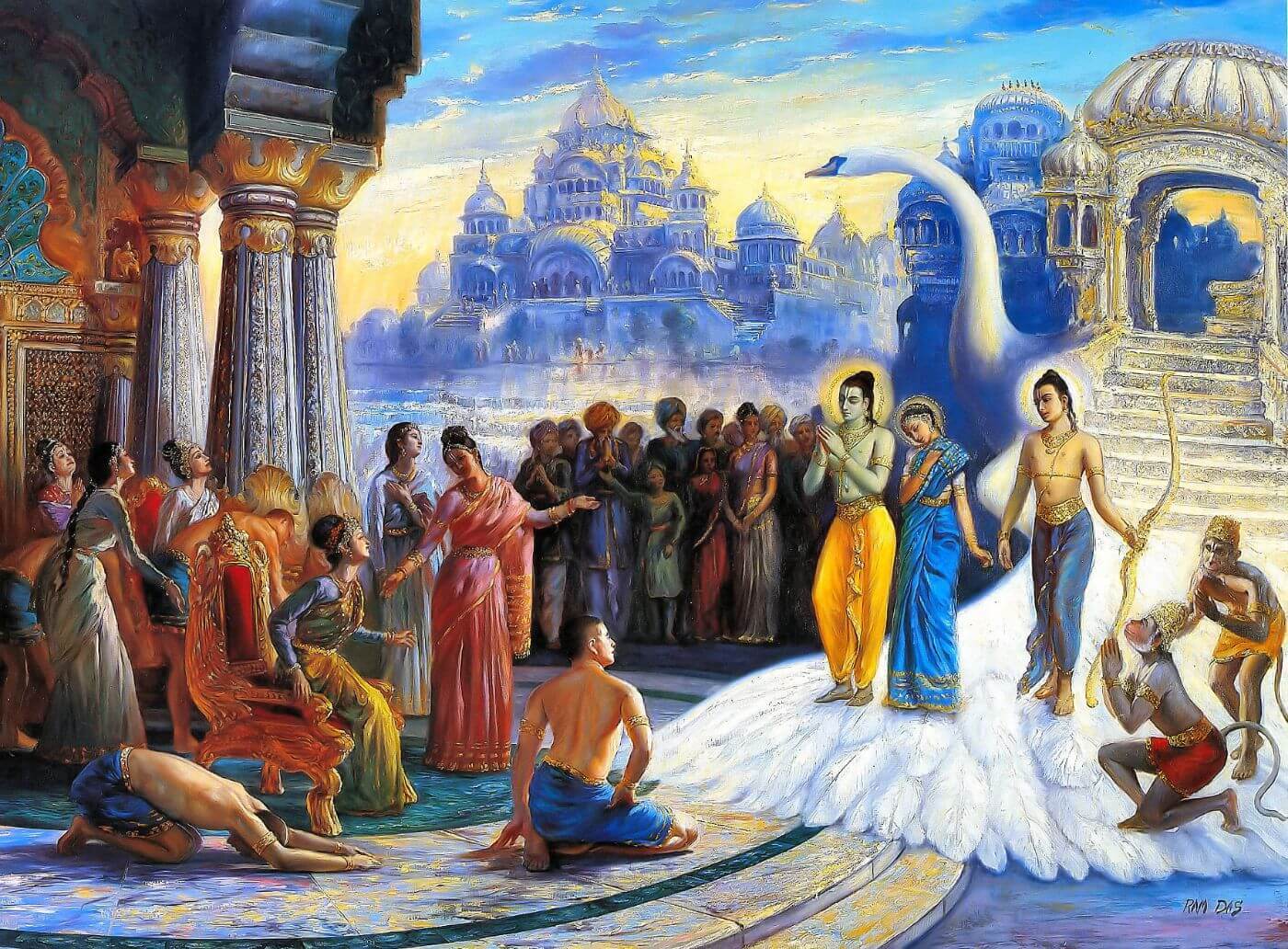

Sita is revered as the epitome of virtue, purity, and selflessness. Throughout the Ramayana, her actions demonstrate immense love, devotion, and resilience. It is unlikely that such a compassionate and forgiving character would curse an entire kingdom, especially considering her deep connection to Ayodhya as her birthplace and the kingdom of her beloved husband.

After Sita's departure, Ayodhya remains immersed in grief and sorrow. However, it is important to note that the Ramayana portrays Ayodhya's redemption through Lord Rama's reign. Under his rule, Ayodhya flourishes, experiencing an era of peace, prosperity, and righteousness. This contradicts the notion of a perpetual curse cast by Sita.

Rather than accepting the literal interpretation of a curse, scholars and pundits offer alternative symbolic explanations. Some suggest that Sita's departure from Ayodhya represents the temporary loss of divine grace, which is later restored through Lord Rama's presence and virtuous rule. Others interpret Sita's departure as a necessary step in the divine plan to fulfill her role as the eternal embodiment of Mother Earth.


While the belief that Sita cursed Ayodhya may persist in popular folklore, it lacks substantial evidence within the original texts of the Ramayana. Examining Sita's nature, Ayodhya's eventual prosperity, and the absence of scriptural support, we can challenge this myth. It is crucial to approach ancient narratives with a critical lens and seek a deeper understanding of their symbolic meanings. The story of Sita and Ayodhya continues to inspire, teaching us valuable lessons of love, devotion, and the triumph of righteousness over adversity.

Monday, June 26, 2023

Vibhishana Series: Myths and Realities of His Fate After the Ramayana War

The epic Ramayana is replete with extraordinary tales, and one intriguing story surrounds Vibhishana, the virtuous brother of Ravana. After the war between Lord Rama and Ravana, Vibhishana was tasked with the challenging responsibility of removing demons from the human realm. According to a captivating narrative, he achieved this by transporting the entire kingdom of Lanka into another dimension. In this article, we delve into the myth and symbolism behind Vibhishana's remarkable feat, exploring the significance and interpretations of this mystical event.

As a result of his unwavering loyalty to righteousness and his allegiance to Lord Rama, Vibhishana was entrusted with the important task of separating the demons from the human population. The objective was to restore peace and harmony among humans, free from the malevolent influence of the demonic forces that had plagued them for years.

In a remarkable display of his mystical prowess, Vibhishana purportedly used his divine knowledge to transport the entire kingdom of Lanka to another dimension. By doing so, he effectively removed the demons and their malevolent presence from the human realm. This act is often seen as a transformative and redemptive gesture, symbolising the removal of evil and the restoration of harmony.


The story of Lanka being taken to another dimension by Vibhishana holds profound symbolic meaning. It represents the separation of darkness and light, the triumph of good over evil, and the transcendence of negative influences. This act serves as a metaphorical representation of the need to remove negativity from our lives and create a space for positivity and harmony to flourish.

Beyond the literal interpretation, some scholars and spiritual enthusiasts perceive Vibhishana's act as an allegory for personal transformation and the battle between our inner demons and higher selves. It encourages individuals to introspect, identify negative influences within themselves, and embark on a journey towards self-improvement and spiritual growth.

The story of Lanka's journey to another dimension has resonated deeply within various cultural traditions and artistic expressions. It is often depicted in paintings, sculptures, and performances, symbolising the triumph of good and the power of righteous actions. The tale serves as a reminder of the importance of making choices that align with virtue and the potential for personal and societal transformation.


The myth surrounding Vibhishana's miraculous act of transporting Lanka to another dimension carries profound symbolism and allegorical significance. It represents the separation of negative influences and the restoration of harmony. This captivating tale serves as a reminder of the transformative power of righteousness and the potential for personal and collective growth. Whether viewed as a literal event or a metaphorical journey, Vibhishana's extraordinary feat remains an enduring testament to the triumph of good over evil in the epic Ramayana.

Monday, June 19, 2023

Ravana Series - The Enigmatic Childhood: Unraveling the Layers

Ravana, the infamous demon king from the epic Ramayana, is often portrayed as a formidable and complex character. However, behind the façade of his adulthood lies a captivating and lesser-known aspect of his story: his childhood. In this article, we delve into the enigmatic childhood of Ravana, exploring the formative years that shaped his destiny and unraveling the layers of his character.

Ravana was born to a sage named Vishrava and a demoness named Kaikesi. His lineage carried a mixture of both divine and demonic blood, making him a unique being with extraordinary potential. This blend of conflicting influences would play a significant role in shaping Ravana's path.


Ravana's childhood was marked by the presence of his grandfather, the sage Pulastya, who instilled in him a deep understanding of the scriptures and esoteric knowledge. Additionally, his mother, Kaikesi, influenced him with her own ambitions and desires for power. These early influences set the stage for Ravana's complex and conflicting personality.

Even as a child, Ravana displayed exceptional intelligence and thirst for knowledge. He was known for his insatiable curiosity and his ability to grasp complex concepts effortlessly. This intellectual brilliance would later become a defining trait of his character, contributing to his strategic prowess and extraordinary accomplishments.


Ravana's relationship with his siblings further adds complexity to his childhood narrative. His brothers, Kumbhakarna and Vibhishana, played significant roles in shaping his character. While Kumbhakarna aligned with Ravana's ambitious and aggressive nature, Vibhishana's contrasting moral compass and righteousness would create a lifelong conflict between them.

Ravana's childhood was not without its share of struggles and trials. As a mixed-race child, he faced discrimination and prejudice from both the divine and demonic realms. These challenges forced him to navigate a complex identity and fueled his relentless pursuit of power and recognition.

Ravana's destiny, as foretold by celestial beings, played a crucial role in shaping his childhood and future. The prophecies surrounding his life, including the significant role he would play in the cosmic battle between good and evil, left an indelible mark on his young mind and set him on a path of self-discovery and self-realization.


The childhood of Ravana offers a fascinating glimpse into the complex nature of this iconic character. Influenced by divine and demonic bloodlines, early struggles, intellectual brilliance, and familial dynamics, Ravana's formative years laid the foundation for his extraordinary journey. Exploring his childhood adds depth and nuance to our understanding of his motivations, conflicts, and eventual role in the epic Ramayana.

Ravana Series- Sita's Relationship with Ravana: A Tale of Perseverance and Triumph

In certain regional versions and adaptations of the Ramayana, there are alternative narratives that suggest Ravana is Sita's father. The...