Showing posts with label Ram. Show all posts

Friday, July 28, 2023

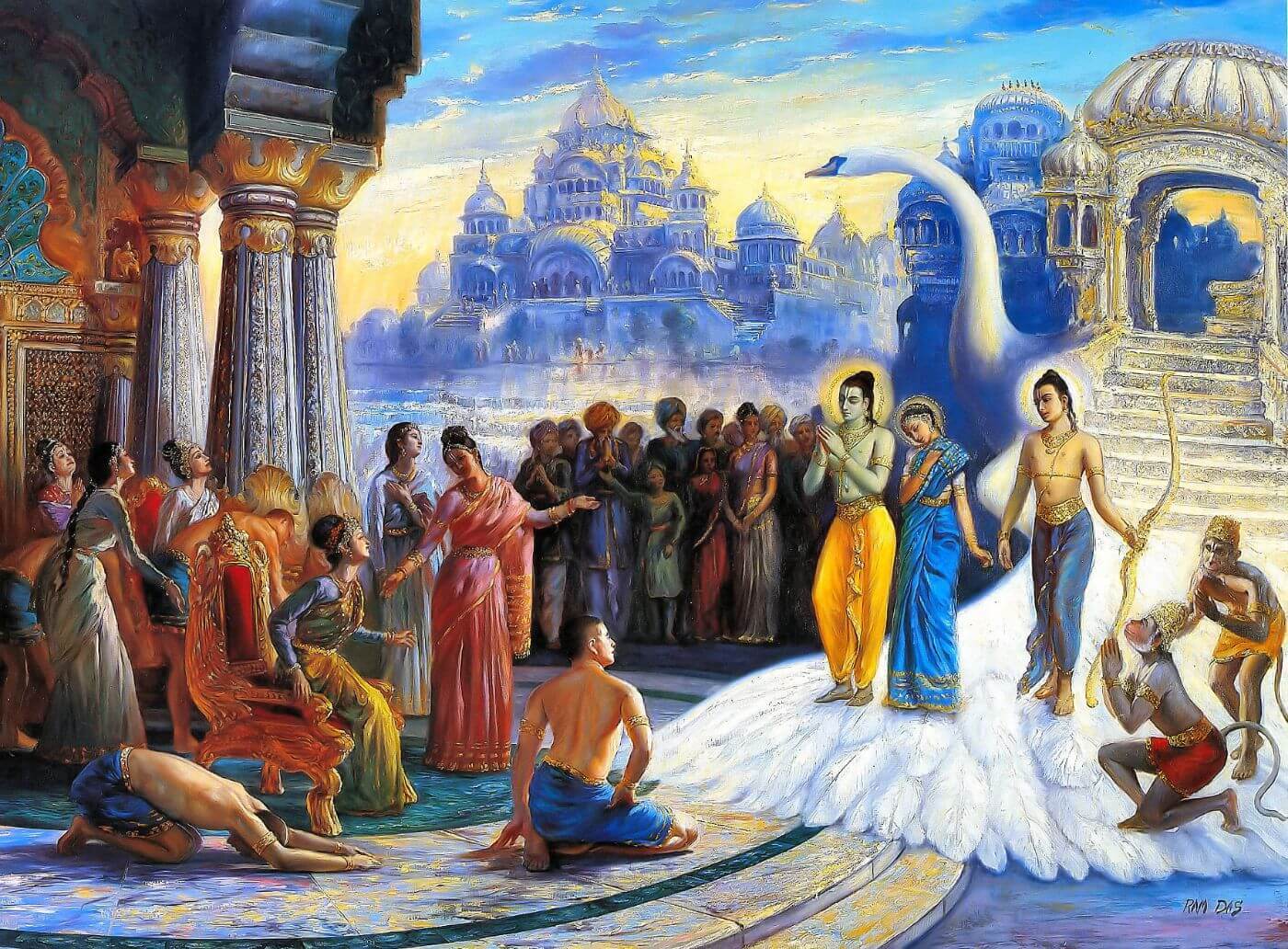
Ravana Series- Sita's Relationship with Ravana: A Tale of Perseverance and Triumph

In certain regional versions and adaptations of the Ramayana, there are alternative narratives that suggest Ravana is Sita's father. These versions present a unique and thought-provoking twist to the traditional story, adding further layers of complexity to the characters and their relationships. However, it is essential to recognize that these interpretations are not part of the mainstream Ramayana as described in the Valmiki Ramayana or other widely accepted versions of the epic.

The concept of Ravana being Sita's father originates from certain folktales, particularly in some South Indian traditions. According to these interpretations, Ravana's sister, Surpanakha, was infatuated with Lord Rama and sought to marry him. Learning about Surpanakha's unrequited love, Ravana takes pity on his sister and proposes to find her a suitable husband. After a series of events, Ravana brings Surpanakha to Lord Vishnu (who is later incarnated as Lord Rama) and requests that He marry her. Lord Vishnu declines the proposal, stating that He is already destined to marry Sita, who is an aspect of the Goddess Lakshmi.

In this version, Ravana performs a Yajna (a ritual) to seek the blessing of a son who would be a worthy match for his sister Surpanakha. During the Yajna, a baby girl emerges from the sacrificial fire, and Ravana takes her as his own daughter, naming her Sita. As Sita grows up, she becomes the embodiment of the Goddess Lakshmi, and it is foretold that she will play a crucial role in Ravana's destiny.
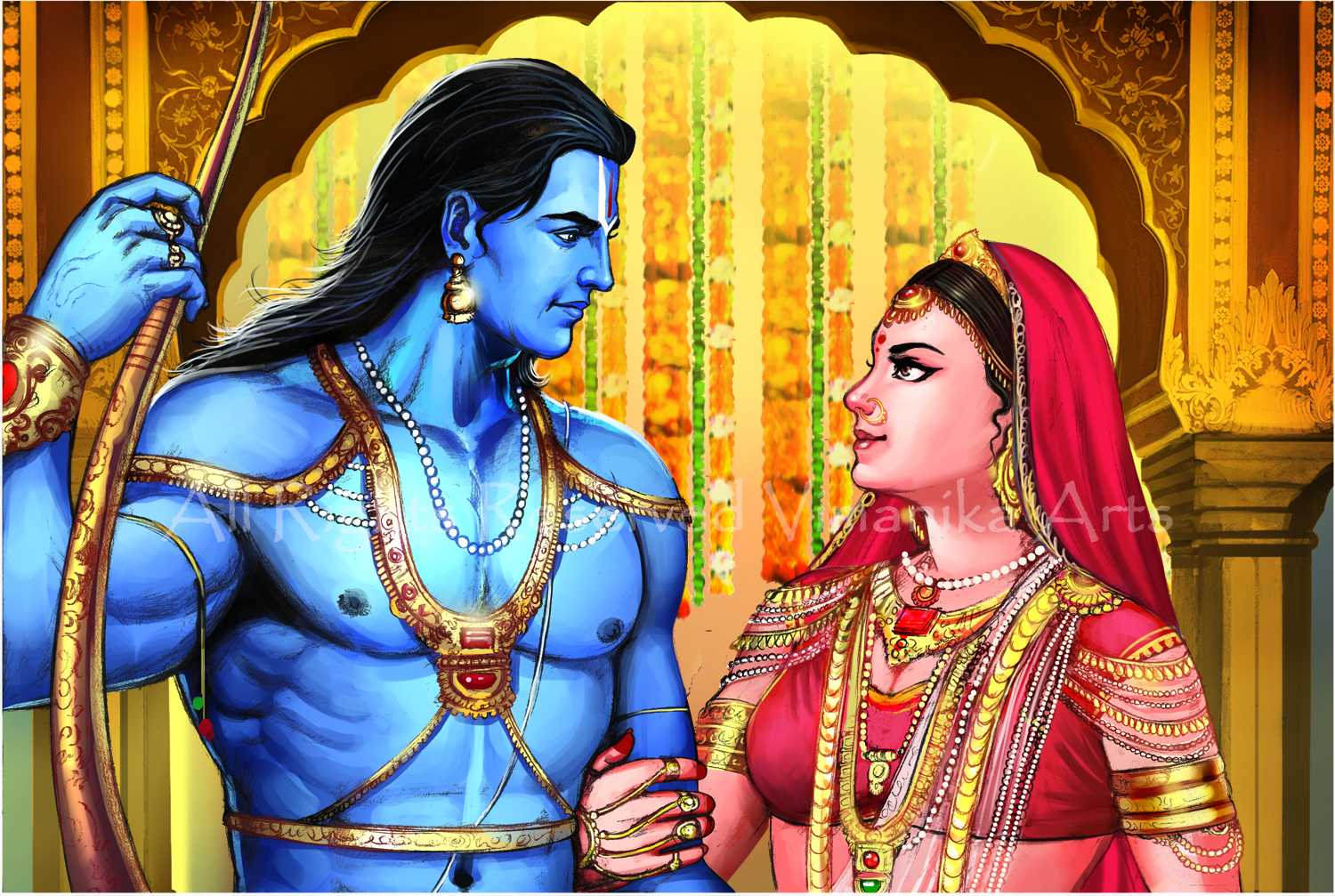
Despite this alternative narrative, it is crucial to reiterate that the mainstream Ramayana, including the Valmiki Ramayana and other well-known versions, consistently describes Sita as the daughter of King Janaka and Queen Sunayana of Mithila. The central theme of Sita's relationship with Rama, her exile, and the subsequent events leading to her rescue from Ravana's captivity remains consistent in these traditional tellings.

Alternative narratives in mythology and folklore often offer diverse perspectives and interpretations of well-known stories. They encourage us to view characters from different angles and appreciate the rich complexity of human emotions and relationships. However, while these alternative versions are intriguing, it is essential to differentiate them from the widely accepted and historically significant Ramayana, which holds a revered place in Hindu culture and literature.

Friday, July 14, 2023

Did Sita curse Ayodhya?

In Hindu mythology, the epic tale of Ramayana captivates generations with its enchanting characters and moral lessons. Ayodhya, the birthplace of Lord Rama, holds immense significance in this narrative. However, there is a long-standing belief that Sita, the beloved wife of Lord Rama, cursed Ayodhya before departing from the kingdom. In this article, we delve into this intriguing topic and seek to separate fact from fiction.


According to the Ramayana, after rescuing Sita from the clutches of the demon king Ravana, Lord Rama returns to Ayodhya to reclaim his rightful place on the throne. However, upon their return, Sita faces a series of trials and tribulations, as doubts about her chastity and purity are cast upon her by the people of Ayodhya. Heartbroken and feeling misunderstood, Sita chooses to leave Ayodhya and seek solace in the arms of Mother Earth.

It is widely believed that as Sita departs from Ayodhya, she curses the kingdom, declaring that it would forever remain devoid of peace and prosperity. This belief has been perpetuated through retellings of the Ramayana, folklore, and cultural narratives. However, it is important to examine the origins of this belief and explore alternative interpretations.

When we analyze the ancient texts of the Ramayana, we find no explicit mention of Sita cursing Ayodhya. The original Valmiki Ramayana considered the oldest and most authentic version, does not include this episode. The absence of scriptural evidence raises questions about the veracity of popular belief.


Sita is revered as the epitome of virtue, purity, and selflessness. Throughout the Ramayana, her actions demonstrate immense love, devotion, and resilience. It is unlikely that such a compassionate and forgiving character would curse an entire kingdom, especially considering her deep connection to Ayodhya as her birthplace and the kingdom of her beloved husband.

After Sita's departure, Ayodhya remains immersed in grief and sorrow. However, it is important to note that the Ramayana portrays Ayodhya's redemption through Lord Rama's reign. Under his rule, Ayodhya flourishes, experiencing an era of peace, prosperity, and righteousness. This contradicts the notion of a perpetual curse cast by Sita.

Rather than accepting the literal interpretation of a curse, scholars and pundits offer alternative symbolic explanations. Some suggest that Sita's departure from Ayodhya represents the temporary loss of divine grace, which is later restored through Lord Rama's presence and virtuous rule. Others interpret Sita's departure as a necessary step in the divine plan to fulfill her role as the eternal embodiment of Mother Earth.


While the belief that Sita cursed Ayodhya may persist in popular folklore, it lacks substantial evidence within the original texts of the Ramayana. Examining Sita's nature, Ayodhya's eventual prosperity, and the absence of scriptural support, we can challenge this myth. It is crucial to approach ancient narratives with a critical lens and seek a deeper understanding of their symbolic meanings. The story of Sita and Ayodhya continues to inspire, teaching us valuable lessons of love, devotion, and the triumph of righteousness over adversity.

Friday, June 30, 2023

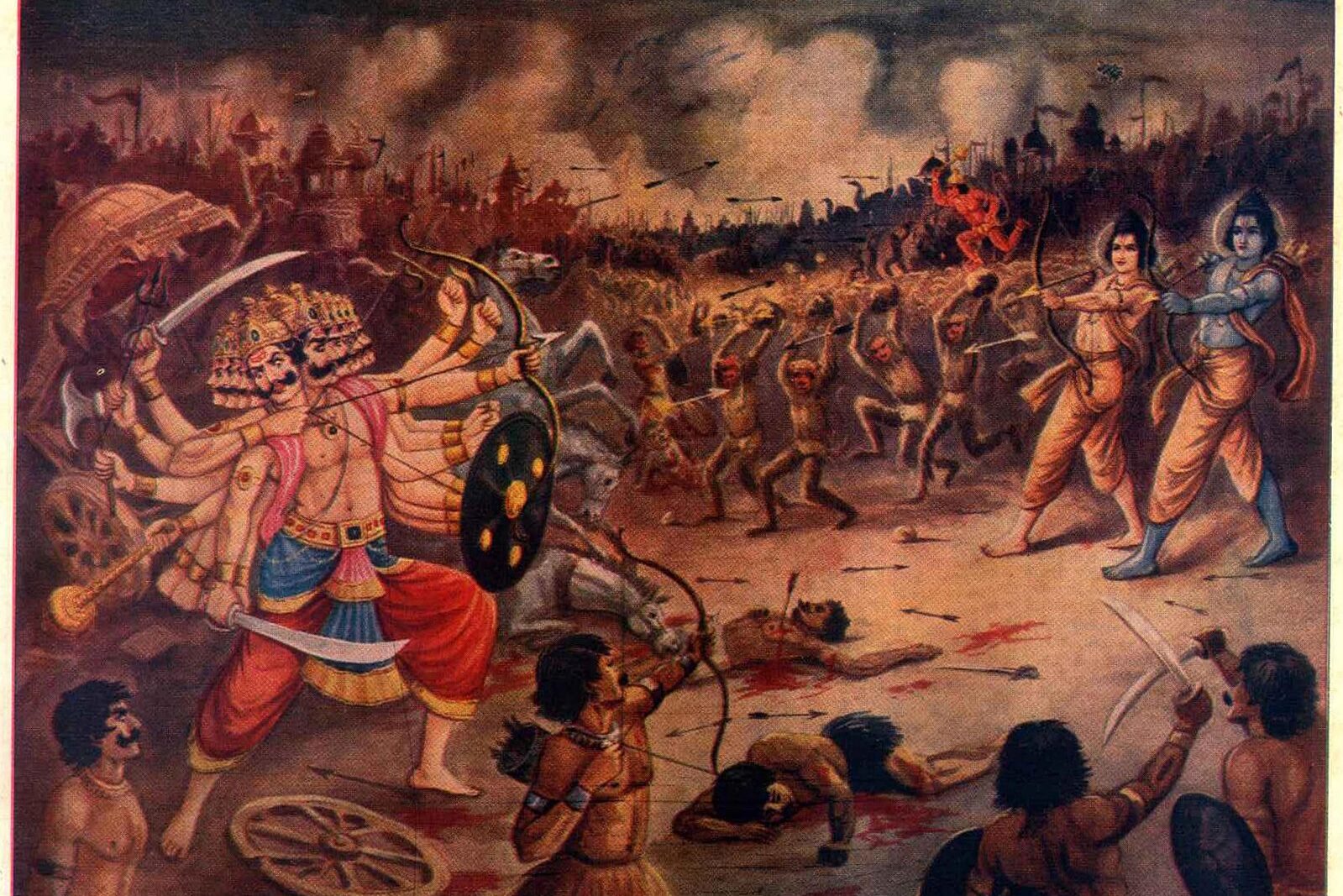
Ravana Series - The Curse of Surpanakha and the Tale of Kalkeya's General: Unveiling Ravana's Apocalyptic Fate

The epic saga of Ramayana is replete with fascinating characters and intertwining narratives that shape its intricate storyline. While the curse of Surpanakha, Ravana's sister, played a significant role in his downfall, another lesser-known love story adds depth to the narrative. In this article, we explore the intriguing story of Surpanakha's curse and the poignant tale of Kalkeya's General, shedding light on how these events contributed to the apocalyptic fate of Ravana.


Surpanakha, the beautiful sister of Ravana, became infatuated with Lord Rama during his exile in the forest of Panchavati. Consumed by her desire, she approached Rama, hoping to make him her husband. However, Rama, steadfast in his devotion to his wife Sita, politely rejected Surpanakha's advances, causing her immense humiliation and anguish.

Enraged and seeking retribution, Surpanakha sought solace in her brother Ravana, narrating the incident and demanding justice. Her wounded pride and seething rage fuelled Ravana's desire for vengeance against Lord Rama, ultimately leading to the abduction of Sita and the events that marked Ravana's downfall.

In the kingdom of Kalkeya, renowned for its martial prowess, there lived a valiant and honourable general. Despite his military achievements, this general suffered from an incurable ailment, rendering him weak and bedridden. Distraught and yearning for a cure, the general's wife, known for her unwavering love and devotion, embarked on a quest to find a remedy that could restore her husband's health.

During her journey, she encountered Ravana, who was impressed by her beauty and unwavering commitment to her husband. Ravana, known for his ability to heal through his vast knowledge of ancient scriptures and herbal medicine, offered to cure the general in exchange for the woman's love and companionship.

The general's wife, loyal and dedicated to her husband, rejected Ravana's proposition, choosing to prioritise her marital vows and fidelity. Touched by her unwavering loyalty, Ravana, though disappointed, granted her a boon, promising that her husband would be cured once he recovered from his ailment.

Ravana's encounter with the general's wife influenced him profoundly, making him realise the true value of love, loyalty, and commitment. This encounter served as a catalyst for his eventual downfall, as it emphasised the stark contrast between his own desires and the virtues embodied by Lord Rama.

The curse of Surpanakha and the unrequited love of the general's wife were integral in shaping the catastrophic events that led to Ravana's apocalyptic fate. Surpanakha's curse, foretelling Ravana's doom and the destruction of his kingdom, hung like a shadow over his actions, pushing him towards a path of conflict and confrontation with Lord Rama.

Moreover, the encounter with the loyal and virtuous general's wife stirred Ravana's internal conflict, highlighting the stark contrast between his own immoral desires and the noble virtues upheld by Lord Rama. This internal turmoil ultimately led to Ravana's downfall and the destruction of his kingdom.

The curse of Surpanakha and the poignant tale of the general's wife added layers of complexity to the Ramayana narrative. Surpanakha's curse, born out of her rejection and desire for revenge, set in motion a chain of events that caused the downfall of Ravana, whipping off his whole clan.

Thursday, June 15, 2023

Ravana Series - Sri Lanka: Unraveling the Myth of Ravana's Lanka

The enchanting island nation of Sri Lanka has long been associated with tales of mythology and ancient folklore. One captivating myth that has lingered for centuries is the belief that Sri Lanka was the legendary kingdom of Ravana, the demon king of the epic Ramayana. In this blog, we delve into the myth of Sri Lanka being Ravana's Lanka and explore the historical and cultural perspectives that shed light on this intriguing belief.


According to the Ramayana, Ravana abducted Sita, the wife of Lord Rama, and took her to his kingdom called Lanka. The epic narrates the heroic journey of Rama and his allies to rescue Sita from Ravana's clutches. Over time, the name "Lanka" became synonymous with Ravana's kingdom, and its connection with present-day Sri Lanka emerged.

While the Ramayana is a treasured mythological text, historians and archaeologists approach the story with a critical lens. Extensive research and analysis have not revealed concrete evidence linking Sri Lanka to Ravana's Lanka. The Ramayana, though revered, is primarily a work of mythology, blending historical events with allegorical and symbolic elements.

The Ramayana describes the journey undertaken by Lord Rama from the Indian subcontinent to Lanka. According to the epic, Rama and his army crossed a mythical bridge called "Rama Setu" or "Adam's Bridge" to reach Lanka. The distance mentioned in the Ramayana is often interpreted as being from southern India to present-day Sri Lanka.


The existence of a natural land bridge connecting India and Sri Lanka has long fascinated scholars and explorers. Known as Rama Setu or Adam's Bridge, this formation of sandbanks and shoals extends between the two countries. However, the connection between the bridge and the events described in the Ramayana remains a topic of debate.

Sri Lanka, officially known as the Democratic Socialist Republic of Sri Lanka, is an island nation situated in the Indian Ocean. Geographically, it is located southeast of the southern tip of the Indian subcontinent. Sri Lanka shares maritime boundaries with India to the northwest and the Maldives to the southwest.

While it is intriguing to explore the connections between mythology and historical geography, it is important to respect the distinction between myth and reality. The allure of Ravana's Lanka lies in its mythical and metaphorical significance rather than its geographical location. Sri Lanka should be celebrated for its own rich history, diverse culture, and natural beauty.


Sri Lanka, with its stunning landscapes, vibrant culture, and warm hospitality, has a heritage that extends far beyond the realm of mythology. The country's fascinating history, ancient ruins, and diverse traditions make it a captivating destination that stands on its own merits.

The myth of Sri Lanka as Ravana's Lanka adds an intriguing layer to the tapestry of folklore and legends that surround the island nation. While the connection between Sri Lanka and Ravana's Lanka is subject to interpretation, it is the historical, cultural, and natural wonders of Sri Lanka that truly make it a captivating destination. Let us appreciate and celebrate the unique identity of Sri Lanka, embracing its rich heritage and the remarkable stories that have shaped its past and present.

Thursday, June 8, 2023

Ravana Series - The Myth of Ravana's Lanka in Another Dimension: Exploring the Reality

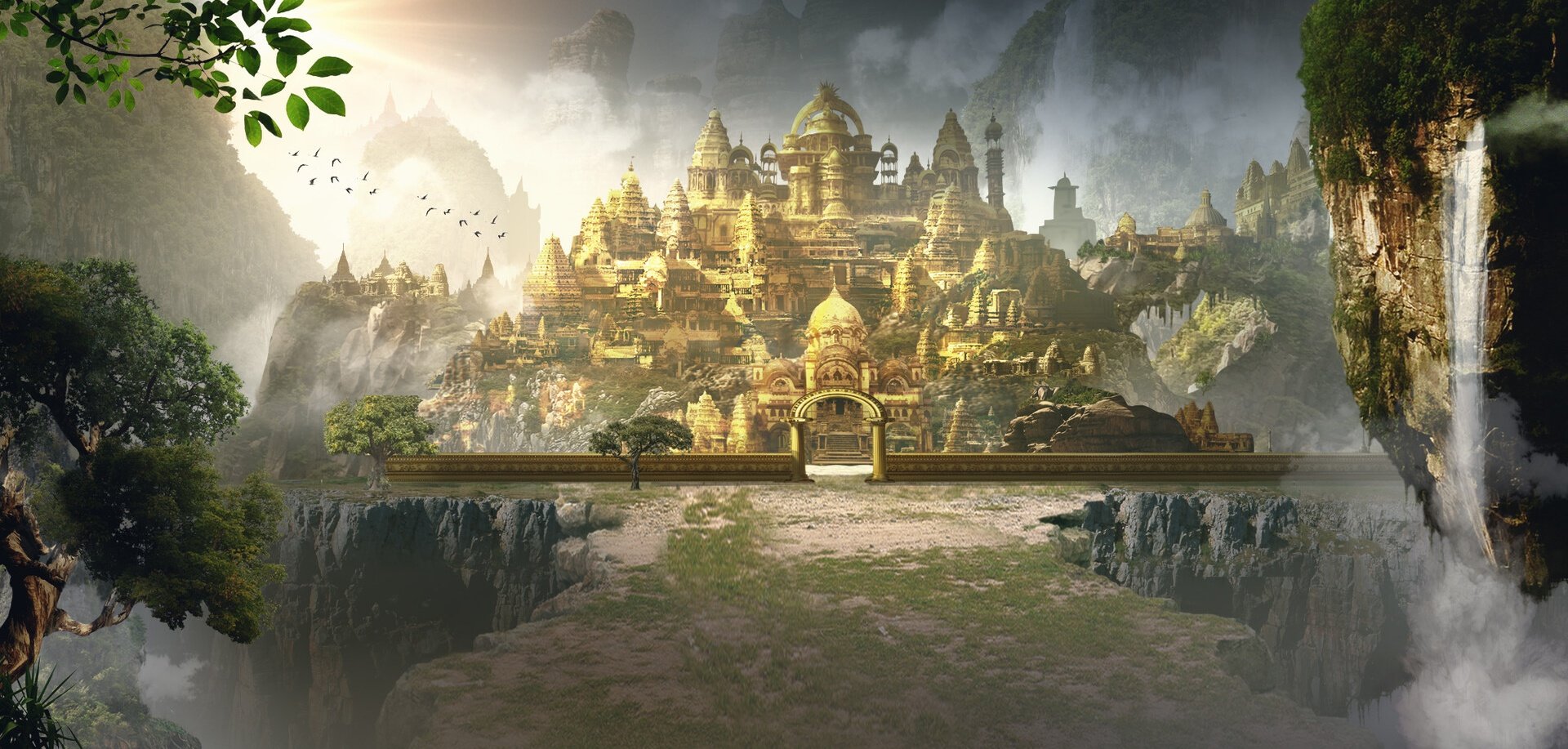
The epic Ramayana has captured the imagination of millions, recounting the legendary tale of Lord Rama's quest to rescue his wife Sita from the clutches of the demon king Ravana. Amidst the story's mystical elements, one intriguing concept stands out: the belief that Ravana's kingdom, Lanka, exists in another dimension. In this article, we delve into the myth surrounding Ravana's Lanka and explore its origins, interpretations, and the reality behind this enchanting notion.


According to certain interpretations, Ravana's Lanka was not merely a physical place but an otherworldly realm, existing in a dimension separate from our own. This concept has captivated the imagination of many, envisioning Lanka as a magical land with extraordinary qualities beyond human comprehension.

One perspective suggests that the idea of Lanka in another dimension serves as a metaphorical representation rather than a literal interpretation. It symbolises the spiritual and psychological battles fought within oneself, with Ravana representing the inner demons or negative aspects that one must conquer to attain spiritual enlightenment.


The concept of Lanka in another dimension holds deep religious and cultural symbolism. It emphasises the eternal struggle between good and evil, the triumph of righteousness over wickedness, and the notion that spiritual realms exist beyond the physical realm.

Different versions and interpretations of the Ramayana exist across various cultures and regions, resulting in diverse perspectives on Lanka's nature. Some adhere to the belief in an actual otherworldly dimension, while others view it as a metaphorical construct or symbolic representation.

It is important to understand the historical and cultural context of the Ramayana. The epic is a revered mythological text, embodying moral and ethical teachings. The concept of Lanka in another dimension may have been introduced to add an element of wonder, mystery, and transcendence to the narrative rather than as a factual representation.


While Lanka's existence in another dimension is an intriguing concept, it is not grounded in verifiable evidence or historical records. The Ramayana is a work of mythology, containing fantastical elements that should be approached with a metaphorical or symbolic understanding.

Regardless of the reality of Ravana's Lanka, the epic Ramayana has left an indelible mark on literature, art, and cultural traditions across generations. Its moral teachings, lessons of righteousness, and the eternal struggle between good and evil continue to inspire and guide individuals worldwide.

The myth surrounding Ravana's Lanka in another dimension adds an enchanting layer to the epic tale of the Ramayana. While it sparks our imagination and prompts contemplation, it should be regarded within the context of mythology and symbolism. Ultimately, the enduring legacy of the Ramayana lies in its timeless teachings and its ability to inspire individuals to embrace goodness and overcome the challenges within themselves.

Ravana Series- Sita's Relationship with Ravana: A Tale of Perseverance and Triumph

In certain regional versions and adaptations of the Ramayana, there are alternative narratives that suggest Ravana is Sita's father. The...