The world of gemstones is often surrounded by intriguing tales and legends, and the Koh-i-Noor diamond is no exception. Regarded as one of the most famous and coveted diamonds in history, the Koh-i-Noor has a storied past filled with tales of curses and misfortunes. In this article, we delve into the captivating legend of the curse associated with the Koh-i-Noor diamond and explore its origins, significance, and the historical events that have fuelled its mystique.

Legend has it that the Koh-i-Noor diamond carries a curse, specifically affecting its male owners. According to folklore, only women can possess and wear the diamond without experiencing dire consequences. However, throughout history, male owners are said to have faced misfortune, tragedy, or even death.
The earliest recorded mention of the Koh-i-Noor diamond comes from the writings of Babur, the founder of the Mughal Empire in India. From that point, the diamond passed through the hands of various rulers, including Shah Jahan, the builder of the Taj Mahal, and other prominent Mughal emperors.
The diamond's curse gained further notoriety when it fell into the hands of Nadir Shah of Persia in the 18th century. It is said that he faced military defeats and assassination attempts after acquiring the diamond. Similarly, Maharaja Ranjit Singh, the Sikh ruler who possessed the Koh-i-Noor, experienced a decline in his empire after its acquisition.
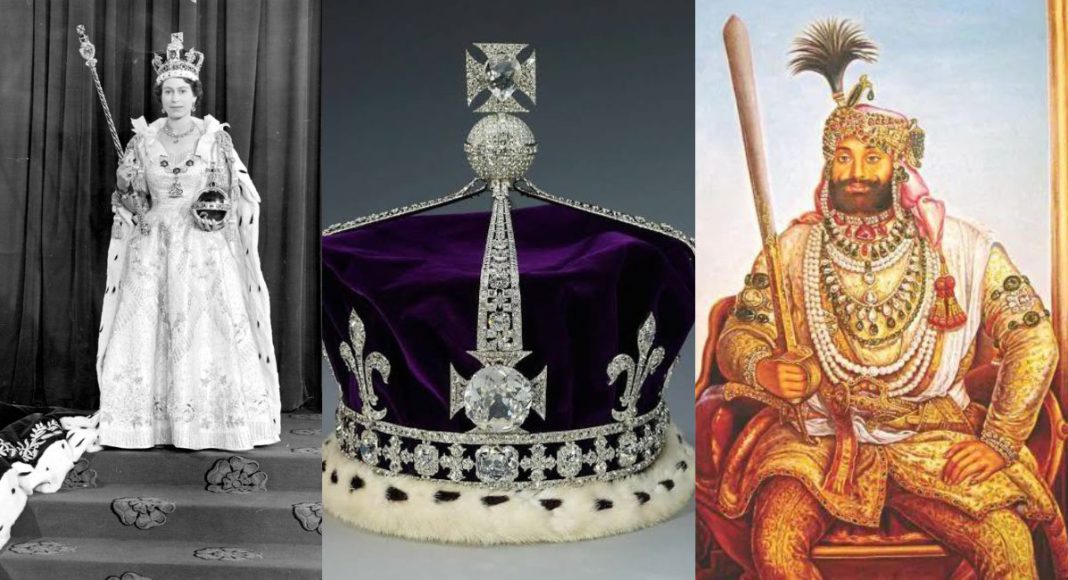
In 1849, following the Second Anglo-Sikh War, the Koh-i-Noor was seized by the British East India Company. It became part of the British Crown Jewels, and tales of the curse continued to grow. Some male members of the British royal family who possessed or wore the diamond allegedly faced marital issues, untimely deaths, or personal tragedies.
While the stories of the curse have captured the imagination of many, it is essential to approach them with skepticism. The belief in a curse is rooted in folklore rather than historical evidence. Many argue that misfortunes associated with the diamond can be attributed to the turbulent times and power struggles rather than supernatural forces.
Beyond the curse, the Koh-i-Noor diamond holds immense cultural and historical significance. It has become a symbol of power, conquest, and national pride. Its journey from India to Britain reflects the complex dynamics of colonialism and the shifting tides of history.
:focal(484x176:485x177)/https://tf-cmsv2-smithsonianmag-media.s3.amazonaws.com/filer/b7/c1/b7c1b6de-75be-4e69-9874-ba98a7af2f75/ap_521114044.jpg)

:max_bytes(150000):strip_icc()/maharshi-Valmiki-56a484175f9b58b7d0d75eb0.jpg)


No comments:
Post a Comment